I tried out for my university football team today.
I didn't make it.
That's the headline. Everything else I'm about to write sits underneath it. I'm not going to dress this up.
But here's the thing I keep coming back to as I sit with it tonight. Three months ago, I tried out for the same team. I didn't make it then either. That trial was bad in a way that's hard to describe to someone who hasn't lived it — I couldn't pass cleanly, I couldn't finish, my stamina gave out fifteen minutes in. I came off the pitch and felt my body had betrayed me, but I knew in the honest part of myself that the body was just reporting the truth: I hadn't done the work.
Today was different. On the pitch I made good passes. I scored. The technique was there in a way it just wasn't three months ago. The thing that still wasn't there was my stamina — and that's why I didn't make it. My body ran out before the trial did.
So I came home today with a strange double-feeling. The failure was real. I didn't make the team. But underneath the failure was something I didn't have the last time I came home from a trial: a clear, specific, fixable problem. Last time, everything was wrong. This time, only one thing is.
That's progress, and progress is harder to recognize than people think.
I want to write about why I think the difference happened, because the answer is small and unglamorous and it's the same answer that will probably matter for the next thing I try.
Three months ago, when I came home from the failed trial, I did what most of us do. I told myself I'd train harder. I'd run more. I'd eat better. I'd sleep earlier. I made the mental list of all the things, and I was sincere about every item on it. And then, day by day, week by week, the list dissolved. Some days I trained. Most days I didn't. Some days I ate well. Most days I'd find myself in front of the TV at 11pm with a bag of chips wondering how I got there.
This isn't a discipline failure. It's a human failure, and I think it's almost universal. The reason it's so hard to follow through on what we want is not that we don't want it. It's that the wanting fades. By Wednesday afternoon, the resolution I made on Sunday night feels like it belonged to a different person.
I'm a computer science student, so my response to most problems is to consider whether software could help. A few weeks after that first failed trial, I started building a small Android app for myself. I called it Unfog. The app does a few things — routines, todos with subtasks, a writing log, a small urge counter — but I want to focus this post on one feature, because it's the one that actually carried me through the last three months.
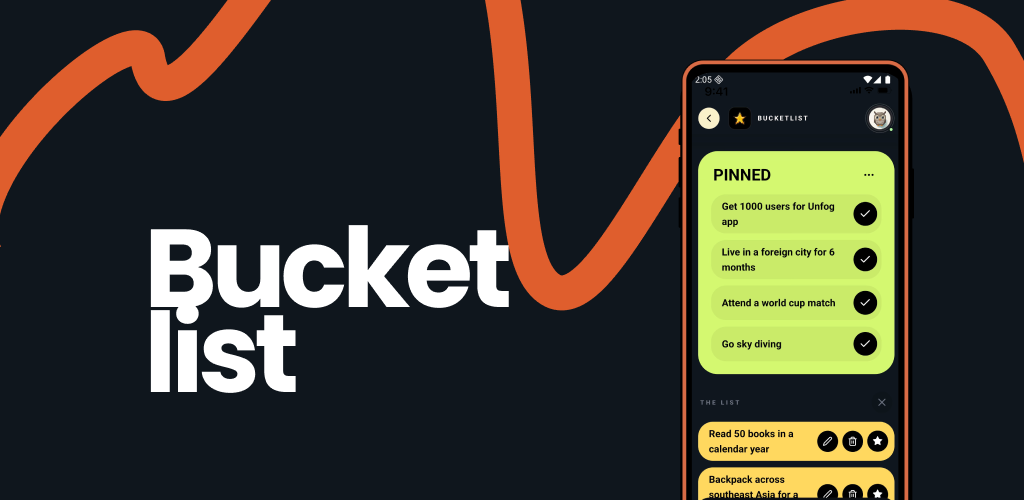
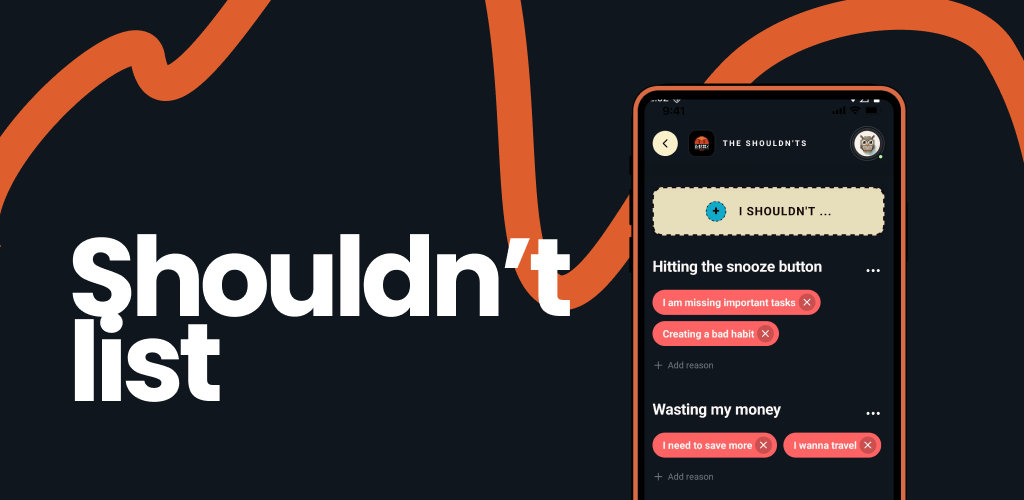
The feature is just three notifications a day. Each notification holds two things: one item from my bucket list (something I want to do with my life) and one item from my shouldn't list (a habit I'm trying to leave behind). Underneath each item on those lists, I write reasons — why I want it, why I'm trying to avoid it. So the notification isn't a slogan. It's a sentence I wrote to myself when I was thinking clearly.
For the football trial, I'd written specific things. On the bucket list side: get a fit physique, build real stamina. On the shouldn't list side: don't eat junk food, don't skip workouts because you're tired. Underneath each one, the reasons. Future-me writing letters to present-me.
The timing of the three notifications is the part I almost got wrong when I was building it. The early-morning one fires hours before I wake up, so by the time I actually open my eyes the notification has been sitting on my lock screen for a long time, on top of everything else. That's the priming notification — it makes sure the first input of my day isn't a feed. The afternoon one catches me around the time I'm tired and most likely to bail on what I'd planned. That's the willpower-collapse notification — it shows up exactly when I'd otherwise drift. And the late-night one arrives when I'm tempted to numb out before bed. That's the soft-close notification — a small reminder of what I'm working toward, before I scroll my way to sleep.
Three notifications. Three different kinds of moments where wanting evaporates and someone needs to put the wanting back. That's the whole mechanic.
Then I just let it do its job, three times a day, every day, for three months.
I'm not going to claim the app is the reason I improved. That would be too neat, and the truth is messier. The actual reason I improved is that I trained more often, ate better more often, and slept earlier more often than I had in the months before. The app didn't do those things. I did.
But the app is the reason I remembered to do them on days I would have otherwise forgotten. It's the reason that on a Wednesday afternoon when I was tired and ready to skip a run, the notification on my lock screen would say get a fit physique and the small inconvenience of seeing those words was just enough to get me moving. The notification didn't motivate me. Real motivation comes from somewhere deeper than that. The notification just kept me from forgetting what I'd already decided.
This is, I think, the thing I keep underestimating about my own mind. I forget what I want. Not on purpose — I just forget. The wanting is real on Sunday night when I'm planning, and the wanting is genuine when I see the notification, but in between those moments, the wanting evaporates and I drift back to whatever's easiest. The phone, usually.
What the app does is plug a small leak. It doesn't generate motivation. It just stops the existing motivation from disappearing.
When the coach told me I hadn't made the team this evening, I sat in the locker room for a while not really saying anything. I felt — and this is the honest version — wrecked. Three months of work and I still wasn't there yet. The voice in my head was the bad voice, the one that says what's the point, you're not actually getting better, give it up.
A while later, walking home, my phone buzzed. It was the evening notification from Unfog. One bucket list item: get a fit physique. One shouldn't list item: don't give up, you have potential.
It was almost funny. The app I built three months ago was, at the worst possible moment, telling me what three-months-ago-me had already figured out. That getting in shape was important. That junk food was the small daily betrayal that compounds into the bigger failure.
It didn't fix the day. But it stopped me from giving up on the project. Past-me had left a note for present-me, and present-me read it at exactly the right moment.
Tomorrow I'm going to train. The next trial is a few months away, and I know exactly what I need to fix between now and then. The technique is there. The touch is there. The stamina is the only thing missing, and stamina is the most boring, most fixable problem in football. You just run, again and again, until the running stops killing you.
I haven't accepted today as a failure. I've stored it. Failures are just data points, and this one tells me exactly what to work on next.
If you're reading this and you're in some version of the same place — wanting things you keep forgetting to want — I'm not going to sell you on the app. You don't need it to do this. You can write your own bucket list and your own shouldn't list on a piece of paper and tape it to your bathroom mirror, and that would work just as well. The mechanism is just a small reminder, in front of your eyes, of what you've already decided.
What you do need is to forgive yourself for the fact that wanting evaporates. It's not a personal flaw. It's just the way minds work. We're not supposed to remember our long-term goals all the time; we're supposed to be reminded of them, again and again, by something outside our momentary attention.
That's all the app is. That's all this whole story is about, really.
Three months ago I couldn't pass. Today I scored. The next trial, I'll make it.
This isn't an ending. It's a stepping stone. I just had to write it down before I let myself forget.